



If your child is turning three or four, you’ve probably noticed the vocabulary shift. Friends who used to talk about “daycare” start saying “preschool.” Programs that look similar from the parking lot describe themselves in very different ways. And somewhere in the middle of tuition pages and tour schedules, most parents end up asking the same question: what’s actually the difference, and which one does my child need?
Here’s the short answer, and then we’ll unpack it.
Daycare is built around care. Preschool is built around learning. Both can be loving, safe places for your child. But at ages three and four, children are ready for more than supervision — they’re ready for a classroom, a teacher, and a curriculum designed to prepare them for kindergarten. That’s the job of a true preschool program.
What is daycare?
Daycare (or childcare) centers provide supervised care for children, often from infancy up to school age. Their first purpose is practical: keeping children safe, fed, and engaged while parents work. Good daycares include play, songs, and social time, and many children thrive there; especially infants and toddlers, who need responsive care more than structured lessons.
Daycares are designed for flexibility. They typically run long hours, stay open year-round, and let families customize drop-off and pick-up times. Staff are trained in child safety and daily caregiving routines, though formal teaching credentials vary widely from center to center.
What is preschool?
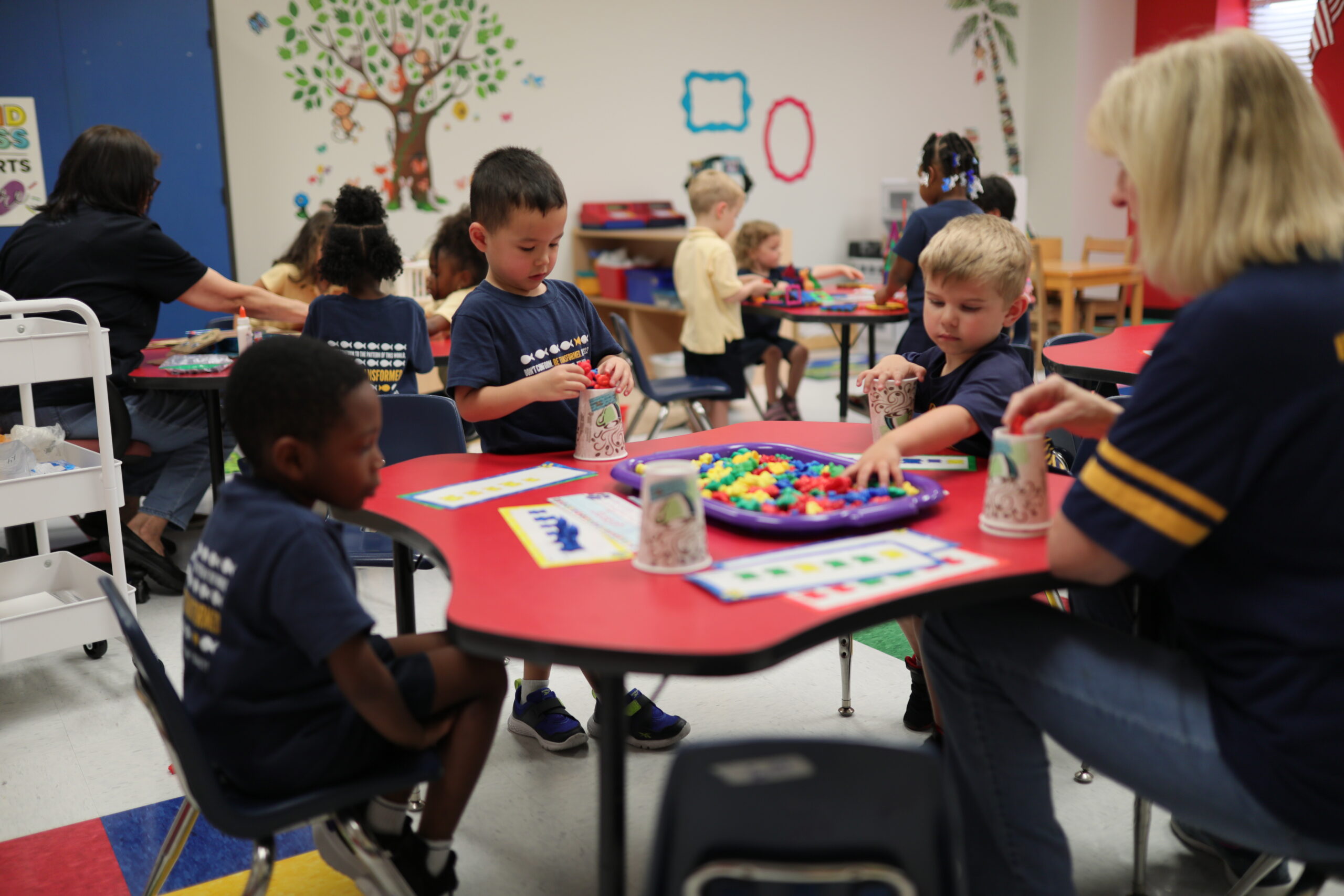
Preschool is an early childhood education program, usually serving children ages three to five. The daily rhythm looks more like a classroom: structured learning time, group activities, and a curriculum that intentionally builds the skills a child will need for kindergarten — letters and sounds, early number sense, following multi-step directions, taking turns, and solving problems with words.
Preschool teachers are more likely to hold early childhood education training, and the program is measured by a different standard than daycare: not just was my child cared for today, but is my child growing socially, emotionally, intellectually, and physically?
Preschools often have enrollment requirements that daycares don’t. Many, including Westbury Christian, ask that children be fully potty-trained and meet an age cutoff before starting.
Does the difference really matter at ages 3 and 4?
Yes — and this is the age where it matters most.
The years before kindergarten lay the foundation a child builds on for the rest of their education. A three- or four-year-old who spends those years in a genuine classroom environment arrives at kindergarten already knowing how school works: how to listen in a group, hold a pencil, recognize letters and sounds, and navigate friendships.
That doesn’t mean daycare is a bad choice — for many families it’s the right one, especially for younger children or schedules that need maximum flexibility. But if your child is three or older and craving “big kid” activities, showing interest in letters and numbers, and ready for more structure, a preschool classroom is where that curiosity gets nurtured on purpose rather than by accident.
The practical question: can working parents make preschool work?
This is the most common reason families default to daycare — preschool hours have a reputation for being short. It’s a fair concern, and it’s worth asking any preschool you tour about their full-day schedule and extended care.
At Westbury Christian, the preschool day runs 8:30 a.m. to 3:15 p.m., five days a week, with complimentary before-school care starting at 7:00 a.m. and after-school care available until 6:00 p.m. In other words: the coverage of a daycare, wrapped around a real school day.
Daycare vs. preschool vs. Westbury Christian: an easy comparison
| Typical Daycare | Typical Preschool | Westbury Christian PreK3 & PreK4 | |
|---|---|---|---|
| Primary focus | Safe, supervised care | Kindergarten readiness | Kindergarten readiness through a Christ-centered, whole-child curriculum |
| Ages served | Infants to ~age 5+ | Ages 3–5 | 3s and 4s (age by September 1; potty-trained) |
| Curriculum | Varies; play-based routines | Structured early learning | Frog Street curriculum: letters and sounds, rhyming, vocabulary, early number sense, patterns, sorting, and sequencing |
| Enrichment | Limited or extra-cost | Varies by program | Music, art, PE, Spanish, weekly library visits, and age-appropriate technology — taught by subject-specialist teachers |
| Faith formation | Rare | Varies | Daily Bible lessons, weekly chapel, and House Groups with older-student “buddies” |
| Hours | Extended, year-round | Often half-day or school hours | Full day 8:30–3:15, free before-care from 7:00 a.m., after-care until 6:00 p.m. |
| What comes next | Transition to a new school for kindergarten | Transition to a new school for kindergarten (often) | A seamless path from PreK3 through 12th grade on one campus |
What makes the Westbury Christian preschool different?
Since 1975, Westbury Christian has welcomed Houston’s youngest learners into a program that treats the preschool years as the beginning of a real education, not a waiting room before one.
A curriculum with a purpose.
Our PreK3 and PreK4 classrooms use the Frog Street program to develop verbal, written, and cognitive skills — introducing letters and sounds, rhyming, and vocabulary through group activities and dramatic play. Hands-on math activities build early number sense through shapes, patterns, sorting, counting, and sequencing. Children also practice the fine and gross motor skills that kindergarten will ask of them: scissors, pencil grip, writing their names, running, skipping, and climbing.
Specialists, not just supervisors.
Preschoolers at WCS don’t just stay in one room all day. They attend daily enrichment classes — PE, music, and art — taught by teachers who specialize in those subjects, plus Spanish, weekly library visits, and developmentally appropriate technology beginning with small tablets. Daily recess and movement breaks are built in, because growing bodies need them.
Faith woven through every day.
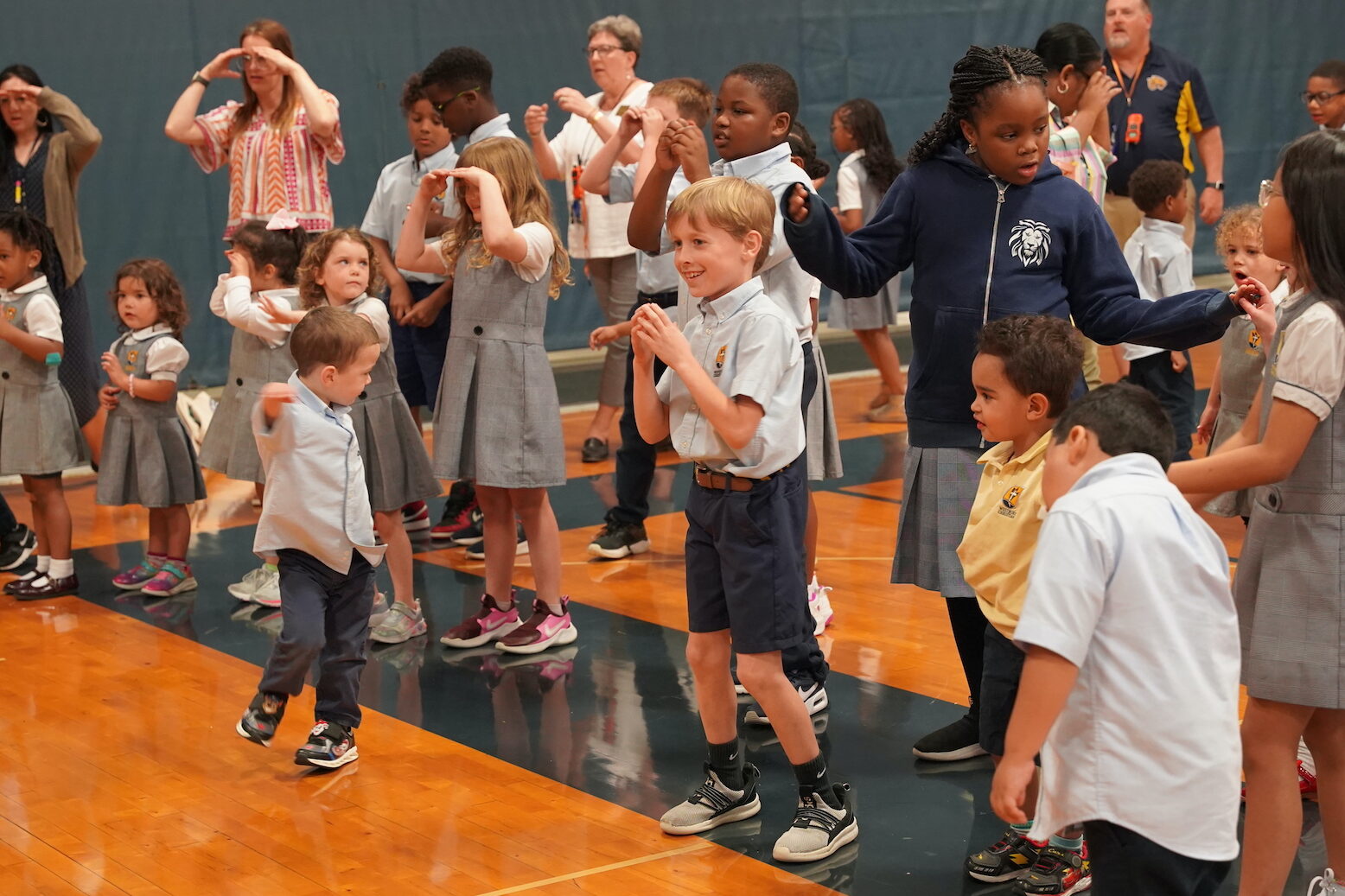
Preschool students grow closer to God through daily Bible lessons, prayer, and singing. They participate in Lower School Chapel and House Groups each week, where they’re paired with older-student “buddies” from 2nd through 4th grade — a built-in mentorship that carries into lunch and after-school time. Even our littlest Wildcats serve others through Project HUG, our Lower School service initiative.
A community where your child is known.
Westbury Christian is a small, diverse school community in Southwest Houston where teachers and classmates genuinely know each child. Families who join at PreK3 don’t face another school search at kindergarten, or ever — the path runs from preschool through senior year on one campus.
Frequently asked questions
Is preschool better than daycare?
Neither is universally better — it depends on your child’s age and your family’s needs. Daycare is often the right fit for infants and toddlers. For children ages three and four, a structured preschool program offers intentional preparation for kindergarten that daycare typically isn’t designed to provide.
How do I know if my 3-year-old is ready for preschool?
Common readiness signs include curiosity about letters and numbers, the ability to follow simple directions, comfort separating from parents for short periods, and being fully potty-trained. At Westbury Christian, prospective preschool students complete the Gesell Developmental Observation, administered by WCS staff, as part of the application.
What are the age requirements for PreK3 and PreK4 at Westbury Christian?
Students must turn three (PreK3) or four (PreK4) by August 1 of the school year and be fully potty-trained.
Do preschool hours work for working parents?
At WCS, yes. The full preschool day runs 8:30 a.m. to 3:15 p.m., with complimentary before-school care from 7:00 a.m. and after-school care until 6:00 p.m., five days a week.
Is Westbury Christian’s preschool accredited?
Yes. Westbury Christian is accredited by the National Christian Schools Association (NCSA) and Cognia.
Come see the difference for yourself
The best way to understand the difference between daycare and preschool isn’t a chart — it’s standing in a classroom. Schedule a private tour and see it firsthand. You’ll meet our teachers, walk our preschool classrooms, and get a personalized look at how faith and learning come together for our youngest Wildcats — with time to ask every question on your list.
Questions about the admissions process? Contact Amy Taylor, Director of Admissions, at ataylor@westburychristian.org.
